2008-05-20 (Tue) |
Quite pleased about this… |
|||
Some people are too clever by half.

(to the dopplr, batbit)
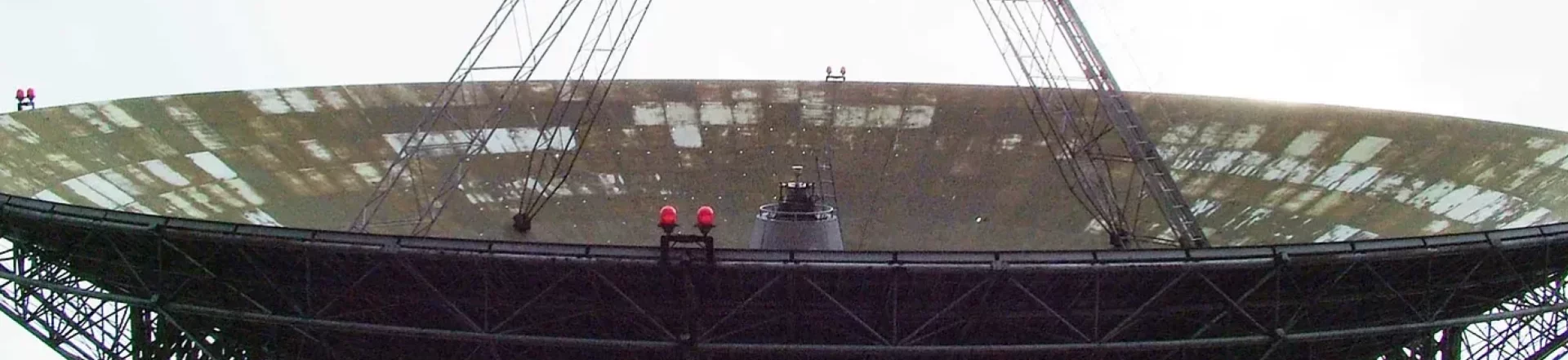
Flying with radar, gaming trashes the internet, passively.
Share This2008-05-20 (Tue) |
Quite pleased about this… |
|||
2008-05-13 (Tue) |
Dopplr and PMOG |
|||
Some people are too clever by half.
(to the dopplr, batbit) Flying with radar, gaming trashes the internet, passively. Share This |
||
2008-04-30 (Wed) |
Uptime |
|||
The core of dgen, 30th April, 22:54:19 up 370 days. #reboot complete A bit like my brain feels. Share This |
||
2008-04-25 (Fri) |
Ulya at the National Gallery |
|||
For those interested in fine art, my friend and long-term collaborator, Ulya Gumeniuk, will be at the National Gallery (Room 21) throughout April and May 2008. Share This |
||
2008-04-16 (Wed) |
Sea ice - how well is it recovering? |
|||
We’re losing 44,000 square kilometers (17,000 square miles) of ice per year in winter (March-to-March). Last year, we watched the lowest ever sea ice measurement unfold. It wasn’t happy viewing. Here’s the graph just after the low point - as of October 16, the extent was 3.20 million square kilometers (1.23 million square miles) below the long-term average. (source: http://nsidc.org/) If we now look at winter, when the ice is reforming you can see what looks like good recovery, but note that the solid black line is the average and the dotted line the previous record low… so it’s still bad. “While the March 2008 maximum was 780,000 square kilometers (301,000 square miles) greater than the past record low, set in March 2006, it was 540,000 square kilometers (208,000 square miles) less than the 1979 to 2000 mean and occurred later in the year. Including 2008, the linear trend for March indicates that the Arctic is losing an average of 44,000 square kilometers (17,000 square miles) of ice per year in March. Although March 2008 extent is greater than in recent years, the setup looks right for another dramatic ice loss this summer.” [emphasis mine] These images and graphs should be part of the weather forecast every day on every TV and Radio channel. Share This |
||
2008-04-7 (Mon) |
Carbon target is a guaranteed catastrophe |
|||
“Carbon target is a guaranteed catastrophe” This was the headline on the front page of The Guardian today. “If you leave us at 450ppm for long enough it will probably melt all the ice - that’s a sea rise of 75 metres. What we have found is that the target we have all been aiming for is a disaster - a guaranteed disaster,” Hansen told the Guardian. It’s fascinating watching the public-facing language around the climate change issue morph into something that is accurate, even though most of the people I know in the scientific community have felt it for a very long time - they’ve also felt that overstating the issue would be alarmist, or that they wouldn’t be taken seriously. Even though we all have the greatest access to mass communication in the history of human-kind, we’ve also systematically undermined and crippled our ability to communicate. We’ve turned everyone into broadcasters. “He … was himself one of the architects of a 450ppm target. But he told the Guardian: “I realise that was too high.” The fundamental reason for his reassessment was what he calls “slow feedback” mechanisms which are only now becoming fully understood. They amplify the rise in temperature caused by increasing the concentration of greenhouse gases. Ice and snow reflect sunlight but when they melt, they leave exposed ground which absorbs more heat. As ice sheets recede, the warming effect is compounded. Satellite technology available over the past three years has shown that the ice sheets are melting much faster than expected, with Greenland and west Antarctica both losing mass.” I think we all knew this was coming. The scientific method moves slowly, and for good reason, but we already know we are exploiting our resources faster than they can recover. We’ve know this for a very long time - certainly more than my lifetime. Given what’s at stake, why are we so afraid of communication? I was impressed with Defra when they asked us to make a minor amendment to the name of AMEE. Originally we’d called AMEE the “Avoiding Mass Extinction Engine”, partly to bring a little bit of a wry smile to everyone we dealt with. When Defra hired us, however, they took this a little more seriously and, after some considerable deliberation asked if we could amend it to the “Avoiding Mass Extinctions Engine”. This was impressive government intervention on several counts - firstly they asked very politely if we wouldn’t mind changing the name even though it was our project. Secondly, as they felt that “Extinction” might lead to mass panic, “Extinctions” was a little, well, softer. And finally, they were right, they based their amendment on facts - it’s not going to be one big extinction event - like a meteor - but a build up to potentially many extinction events. Doesn’t that make you feel so much better. When we look back, assuming we can, with our 20:20 hindsight and question how we’d created a global society where broadcasting is primary and listening is secondary, I wonder what we’ll build to avoid it “next time”. Share This |
||
2008-04-2 (Wed) |
Play me, play you |
|||
“CBS Radio and Last.fm, both owned by CBS Corp, have teamed up for closer collaboration on their respective radio initiatives. Under the agreement, CBS Radio will stream all its stations to Last.fm’s U.S. users. This includes KROQ in Los Angeles, WCBS in New York, WXRT in Chicago and WVEE in Atlanta. What does this mean? If you look at the BBC presence I see no evidence of any “radio streaming”. BBC Radio 1, Radio 2, Radio 3 and Radio 4 all have pages, but there’s no live radio simulcast. They all say, “BBC Radio X isn’t yet available to play on Last.fm.” Does “stream stations to users” mean putting a hyperlink on a web page? Embedding a streaming URL in a web page? Exchanging metadata about what’s playing so you can play the same thing? Last.fm providing a relayed streaming feed whereby Last.fm pay for the delivery infrastructure? I suspect it’s the exchange of metadata, in which case we have a complete mess of jargon being used in the media and really odd expectations being set. … and if radio stations have an API on their playlists, then this kind of mashup requires no commercial intervention, let alone a press release. It certainly isn’t “radio”. Share This |
||
2008-03-31 (Mon) |
GWP vs GWP vs GWP |
|||
Interesting coincidence of acronyms: Share This |
||
2008-03-21 (Fri) |
Convergence |
|||
Interesting convergences: http://www.opendemocracy.net/…/global_threat_multiplier http://www.guardian.co.uk/technology/2008/mar/20/freeourdata.politics http://www.guardian.co.uk/technology/2008/mar/20/interviews.internet |
||
2008-03-19 (Wed) |
RIP Arthur C. Clarke |
|||
Sad news today. Clarke’s three laws; 1. When a distinguished but elderly scientist states that something is possible, he is almost certainly right. When he states that something is impossible, he is very probably wrong. 2. The only way of discovering the limits of the possible is to venture a little way past them into the impossible. 3. Any sufficiently advanced technology is indistinguishable from magic. http://www.clarkefoundation.org/ Share This |
||