Archive for March, 2004

Invited speaker – “Broadcast Assassins” an internal BBC workshop for key managers

Quite nice to be invited to, albiet by this time most people should have “got it”.

Of course, walked straight into the room and met John Ousby…. should’ve known.

(apparently I’m a “a man with two brains “)

Comments No Comments »

In response to [published in the proceedings from]

Westminster Media Forum “BBC 2016 Charter Renewal” meeting 2004-02-25 at Millbank Tower.

Inverting the Model

Working at the junction between the macrocosms of broadcasting (TV and Radio) and the internet (everything) is always stimulating. You always have to assume that you know nothing about either. Both have such different language and thought processes it’s often a leap of faith even to communicate. The only thing shared is ego size.

If Web content creators ever felt 2nd-rate to newspapers, TV or print, they are not alone. I’ve been to many “broadcasting” meetings where you can hear the radio guys explode because the TV folks just don’t acknowledge them. TV sits in its Empire with its own eyes and voice.

A lot of people have actively and tangibly been recreating the TV and Radio “distribution” over the last decade. There isn’t a good word to describe it – Broadcasting over the Internet is just a thing you can do. Webcasting, Streaming, Downloading, etc. fall into the same trap as Broadcasting (Terrestrial, Cable, Web) in describing distribution technology – none describe the medium. Unfortunately the Internet does all of them.

We are, today, at a new junction point and our BBC could be its champion.

It has built one of the most formidable and difficult to achieve reputations in the emergent globalised world: that of a trust-network.

It is the “most popular content website” precisely because of its perceived impartiality. The existence of BBC online has helped people discover the “Digital World” – to look at Britain is starting in the wrong place.

Our “unique service” captures the eyes and ears of the world. It is “owned” by the people. There is no capitalist-agenda at its core: it exudes egalitarianism, fights governments, loses, wins, but cares. Of those I’ve met who work for or with our BBC have a sense they are protecting our culture. There are notable exceptions to this, but this is not my aim here – the global public perception is of quality and “moral purpose”.

So, we are faced with change. The BBC publishes vast quantities online, and is consumed fervently worldwide. This year will see significant change – placing live on-air and archive content from both TV and Radio online, in some cases with a 7-day rolling archive.

You can visualise a day, not very far from now, where all of BBC output from all sources is available online, including the entirety of BBC archives – to a global audience, for free. However, its competition and critics are diverse and growing.

So, let’s turn the model on its head. Phase out the license fee and charge an optional online subscription fee for BBC Online. 10m people paying 33p a day recoups £1.2bn per annum. For an online service, this fee is tiny. For the BBC it has considerable worth. Some lucky subscribers also get “normal” TV and Radio transmission thrown in for free by virtue of their geographic location, and its public-access remit is upheld.

Our BBC doesn’t need to change what it makes, or why – people already come to use its archives, to watch news, trust in the communities it builds, its transparency and who it links to. It forces greater accountability and could change “how” content is made. Also, the sticky problem of UK taxpayers subsidising the rest of the world for online content goes away, or rather, turns through 180 degrees.

It can be transparent about the money raised in ways that profit-organisations cannot: publish its revenue hourly, online. Give viewers a sense of what is being made, and what their money makes achievable in real-time.

Take it further and let people influence what is funded after the base financial targets are hit – publish budgets for uncommissioned programmes and let individuals “donate until the budget is hit”. Then make the programme and release it on air, online and on DVD.

If we want a Digital Britain. If we want to catalyse the world’s thinking on globalised media and its responsibilities: use the BBC’s scale and experience, and put its direction in the hands of its global audience.

Gavin Starks
European Chairman, International Webcasting Association

Biography
Entrepreneur and Webcasting innovator, Gavin has pioneered streaming
media since 1995. He is a founder and European Chairman of the International
Webcasting Association. After helping to build Virgin Net in 1995
he created award-winning webcasting company, Tornado Productions,
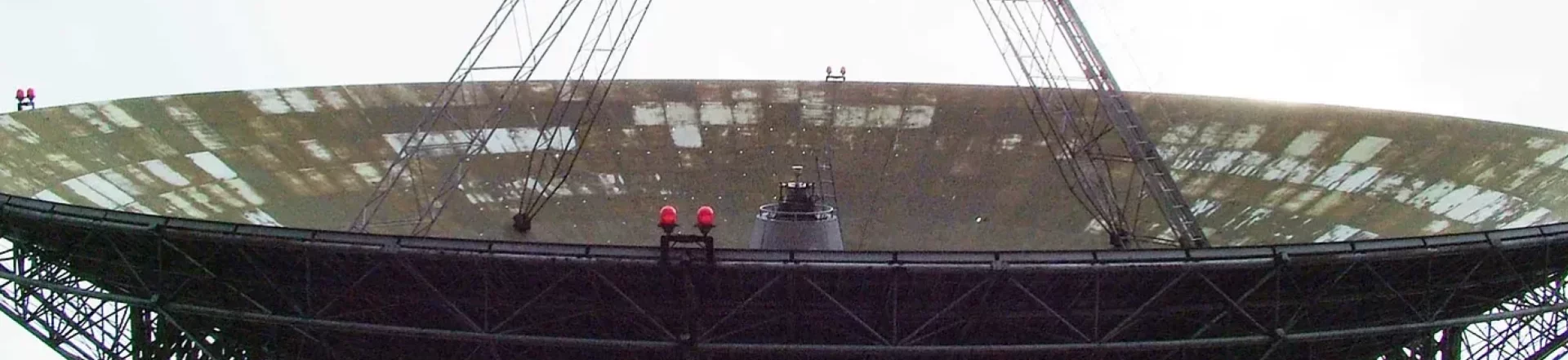
selling it in 2003. He has worked at Jodrell Bank Radio Observatory,
had his music performed, and his research published, internationally.
http://www.webcasters.org

v1.0 Gavin Starks, 4th March 2004
v0.5 Gavin Starks, 29th Feb 2004

Comments No Comments »

Webcasting, Streaming, Digital Downloading and Broadcasting

All these terms refer to the same thing: the ability to distribute media. Until recently, we’d been using TV, Radio broadcasting, CDs and tapes to distribute our media. The internet has changed all that: making receiving some music, TV and moveis as easy as sending an e-mail.

People are already doing this in their millions every day, often to the annoyance of the copyright holders. Rather than talk about the legal issues, let’s focus on what’s possible. The more interesting questions are about what can we build.

At the end of the day, it all boils down to a single principle – transferring data over the net. Web pages and text were just smaller files – it was just easier to do that first.

We’re familiar with MP3s now. This has massively increased awareness of how the internet changes media consumption. The increased speed of internet access ("broadband") in the home, combined with greatly reduced cost of transmission ("bandwidth") is leading us toward tangible alternative business and consumption models.

We are in that period of change.

1) Redefining "Live"
Broadcasting has always been defined by physics – transmission is limited to territories. Our businesses and laws have evolved to exploit a territory-based commercial structure for distribution and profit. Although global, satellite has always been too expensive to make it worthwhile for all but a small minority of content providers.

Online we can all be broadcasters. Any PC sold in the last 5 years is powerful enough to act as a "transmitter". For audio ("radio") you don’t even need broadband.

After a lot of deliberation, I now use the term Webcasting to encapsulate any form of live transmission that uses the IP (the Internet Protocol) as a carrier (which will eventually be everything).

2) Redefining "Demand"
Our product-led "demand" media world is also completely governed by territory-based rights, just like broadcasting.

But our analog on-demand world also has two distinct stages. The first is buying/borrowing some hard-media, like a CD. Once we have it, we have another choice – what hard-media to take out of its box and place in our CD player. The effort involved in this should not be under-estimated. It makes us choose what we listen to quite carefully.

When we don’t want to choose carefully we put on the TV or Radio – Live Broadcasting is (was) content someone else choose for us.

Now, sitting here with my entire music collection 1-click away, all my patterns of choice have changed. Quite often I choose "random play" and rediscover music I’ve not listened to for ages. If
I get bored I can skip an album with the same effort I used to skip a track. It’s really very different.

If I want to listen to a friends CD or some new music that they think I might like, they can just e-mail it to me. If I like it I don’t "make a copy", I just don’t delete it. If I want to pay the artist I can sometimes buy the tracks online, otherwise I’d have to order the CD off Amazon.

But anyone can send me the files, and I can send them to anyone else.

Online we can all be distributors. Virtually any PC in existence can act as a distributor – which is why services like Kazaa just fly.

So what do we do with it all?
All the hooha about legal rights is based on territory and technology-based models that dont fit online. But I said I wasn’t going to talk about that.

Instead, let’s look at why we "are where we are": the legal rights are actually meant to be there to "protect the people who make a living out of being creative". We are this "creative industry". We are meant to be being creative with all these new applications – instead our 8 year-old kids are
just working out what they want and are getting on with it, while much of the industry tries to protect its old house.

What we can do instead, now the ‘net bubble is gone, is focus on being creative with our industry – taking risks. We can building direct relationships between our customers and how we finance our business (or, in more popular jargon "engage with our community"). We can build trust-networks, be completely transparent, not rely on intermediaries assuming editorial control, be our own channel with other people that we like – let our audiences decide for themselves and let them tell us directly.

We have a unique opportunity to listen to and even watch our own audiences. We need to work out how to engage with them, not isolate them even further from the creative world that they are buying into and are an integral part of.

Comments No Comments »