Archive for the “stuff” Category
“On 12 April 1961 Yuri Gagarin became the first human in outer space and the first to orbit the Earth. 2011 sees the fiftieth anniversary of that event…”
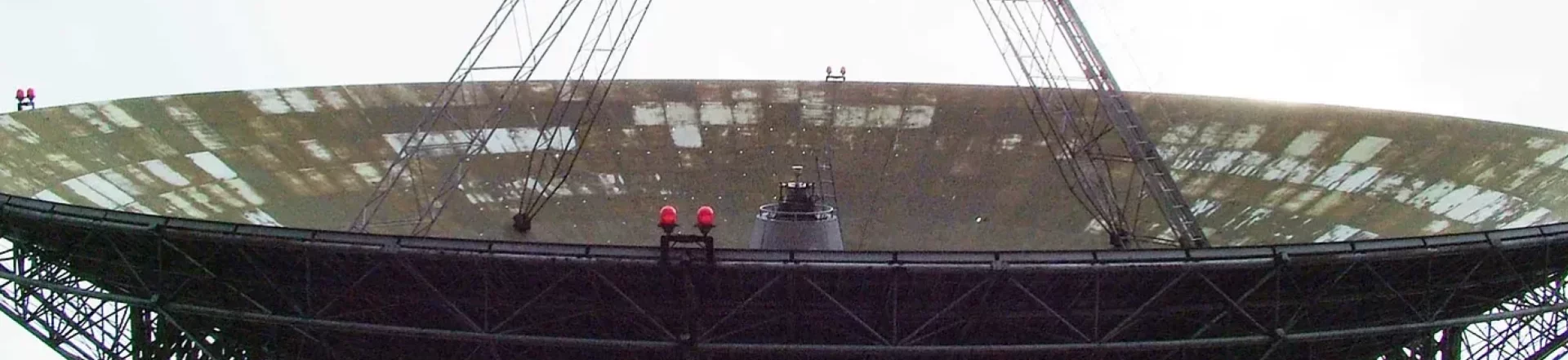
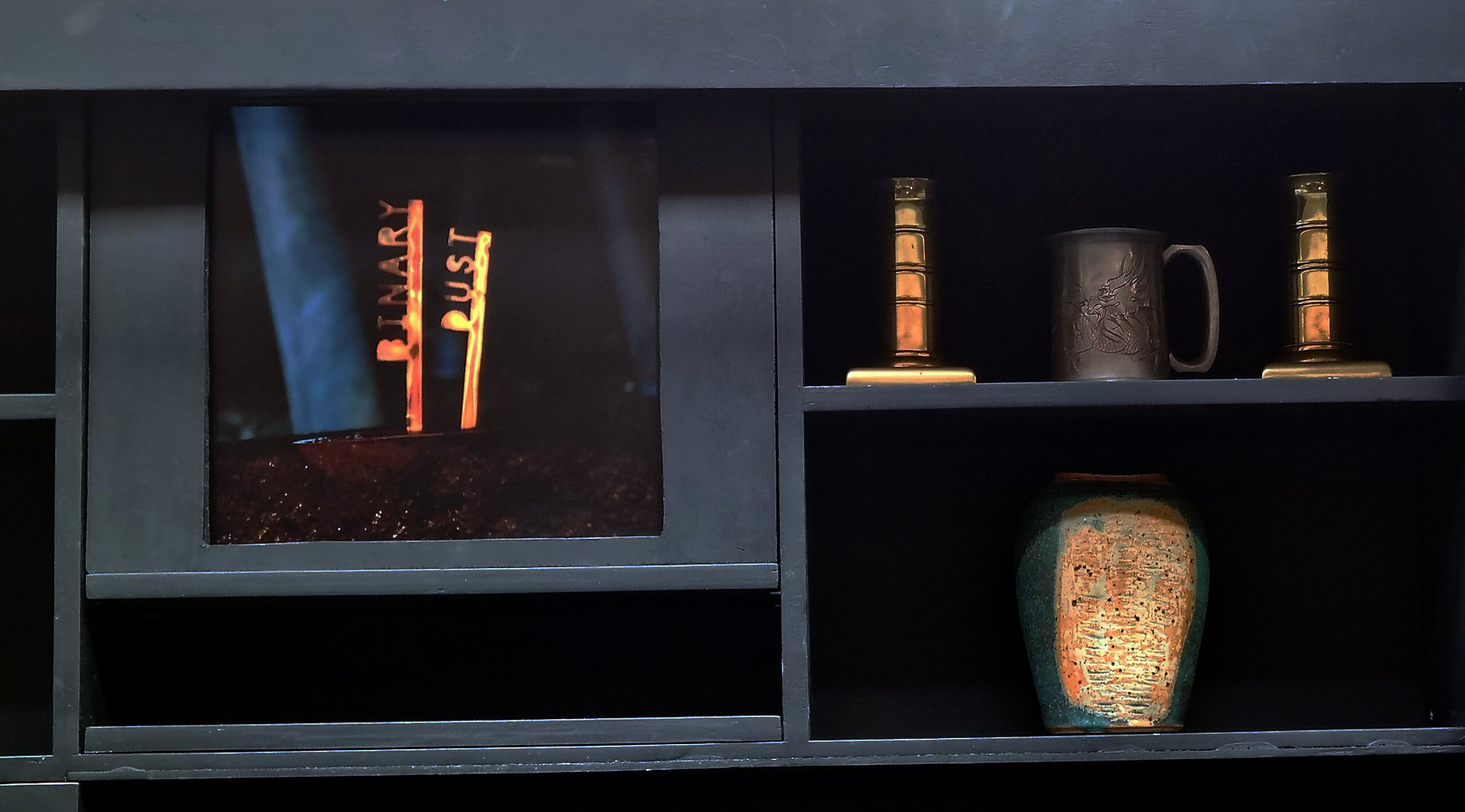
As part of my ongoing work on Binary Dust, I am speaking at Heavenly Discourses on Sunday 16th October 16:45 – 18:00. PANEL: Music
I’ll be presenting new work (including sounds and pictures derived from ALMA) that my great collaborators, Andrew Newsam and Julie Freeman, have helped me with (thank you!).
Here’s the abstract of my paper. I am delighted to have been accepted – esp. as I’m one of the few/the only non-institutional presenters at the conference.
The utterance of a cosmological model?
A conjoining of languages, Acoustic Cosmology is an attempt to describe our audible worlds – a 21st century progression of the music of the spheres – a narrative of acoustic sculpture within n-dimensional space. With no intentional stance on sound as a cultural construct or phenomenology, we openly explore links between cosmology and music, using the language of mathematics and sonic art.
Building on the works Trevor Wishart and Jean-Pierre Luminet, and developed by professional astronomers and musicians, we question and connect the fabric of these non-verbal languages.
Using cosmology and sonic art as its basis, this paper will provide a journey of discovery – a basis for discussion in the junction between music and astronomy, opening up new methods of comprehending scale, connection, depth and complexity. Sound examples and visuals will be included in the presentation.
No Comments »
Calling Virgin Galactic: “if we could get our political leaders to have a summit meeting in space, life on Earth would be markedly different”
Alex Evans reflects “during a break in an all-day meeting of senior policymakers at the United Nations, on the subject of ‘global sustainability’. Know what? The room had no windows”
On this excellent snippet from and interview with Apollo 14 astronaut Edgar Mitchell:
“Every two minutes, a picture of the Earth, Moon and Sun, and a 360 degree panorama of the heavens, appeared in the spacecraft window as I looked. And from my training in astronomy at Harvard and MIT, I realized that the matter in our universe was created in star systems, and thus the molecules in my body, and in the spacecraft, and in my partners’ bodies were prototyped or manufacted in some ancient generation of stars. And I had the recognition that we’re all part of the same stuff, we’re all one. Now in modern quantum physics you’d call that interconnectedness. It triggered this experience of saying wow, those are my stars, my body is connected to those stars. And it was accompanied by a deep ecstatic experience, which continued every time I looked out of the window, all the way home.”
No Comments »
Posted on April 10th, 2011 by Gavin in politics, socialchange, stuff
I’ve got some thoughts about a different way to create a distributed education. One I think could break through silo’s in our Psychogeography and Biogeography. Please bear with me and, of course, if someone has already done this, please let me know!
Background [or skip the background]
A familiar problem but always a new one to first-time parents: how to choose a school.
In the UK, there are useful Ofsted reports, as well as excellent emerging services like School-o-scope.

But these don’t seek to address some of the macro-issues that exist and, being a data-geek, it got me thinking.
The catalyst was hearing that there is a “really good school” down the road, that happens to be a Catholic school.
Firstly, let me state clearly that I have no issues with other’s belief systems. I am non-religious, but I do strongly believe in secular systems to promote equality (including equality of beliefs).
So, some data (please send me better data if you have it);
- Catholic schools provide 10% of school places
- Catholic schools receive 90% state funding as opposed to 100% for pure-state schools
- Catholic schools maintain 30% intake of non-Catholic denomination
- Catholic primary schools: 74% were rated good or outstanding, higher than the average of 66% across the UK
From this point on, I’m going to stop referring to “Catholic” as the points I wish to explore are not even specific to faith as an issue.
We have an interesting perspective here: state funding of a belief system producing better results. State-funding of 90% of the school with only 30% of the intake who are “non-demonination”.
This got me thinking;
- Do I think faith-based schools are acceptable: yes
- Do I think the state should help fund them: I have no general issue here, other than balance
- Do I think private faith-based schools have the right to discriminate against kids who don’t “believe”: it’s up to them
- Do I think state-funded, faith-based schools have the right to discriminate against kids who don’t “believe”: definitely not. This is prejudice at the entry-level to society. It does not create a path to equality.
I then went down a line of “how do you break an embedded system” which is fairly immutable, and being annoyed that my child wouldn’t have fair and equal access to a “state-funded best school”, because of a belief system he is not old enough to comprehend.
How could we cultivate more diversity? What would be the implication of disallowing state-funded schools to be predjudiced against children based on a notion of faith that the kids don’t even comprehend?
But it occurred to me that there was a much bigger question.
Having grown up in place where there was one school (and buses to take us all there), this wasn’t a parameter I’d had to consider. Now, living in London where there are hundreds of schools, a high population density, and huge cultural diversity, I had some immediate observations:
- 1. There is fierce competition. Parents naturally want to get their kids into “the best” school. The parents have the Ofsted reports and anecdotal evidence to go on. They produce a preference list. Then cross their fingers.
- 2. Schools have a selection process that is defined by each individual school’s Admissions Authority, and then broadly the distance (“catchment area”) you are from their school. I’m sure the school’s AA’s go to great pains to ensure fair distributions, but I have not found a data source that aggregates and makes all the rules public (ie. data mineable).
- 3. In a school near me, [allegedly] over 70% of the kids speak English as a second language. This obviously reflects a local population-density along specific cultural lines.
- 4. In “one of the best” schools near me, less than 30% of the kids are allowed in unless they follow a particular belief system. Such imbalanced “nodes” can act as magnets that affect the local population.
So, how could you address the ghettos of cities (middle-class, low-income, monoculture pockets, etc — my definition of ghetto is a physically local group who live there because of social, economic, or legal pressure – this applies to Chelsea as much as Silvertown). What would you do instead?
We have geo-coded data emerging that maps that detail ethnicity, religion and related metrics. We know the data on all the schools. We could get the rules of every school and simply game the system to individual advantage. But, wouldn’t there be a better way?
A 20 mile cycle around East London on Saturday helped me get a feel for the psychogeography, and a possible solution.
Using data to evenly distribute diversity
My proposal is this;
“We wish to create an outcome of less prejudice, more integration and better learning. This should start at school.”
We can posit the following;
- 1. We have a legacy notion of distance. In this case, the physical distance surrounding a school.
- 2. In cities, we have vast cultural diversity in dense areas. Often this is ghettoised. It is mapped.
What if;
- 1. We redefined distance as the temporal distance (TD) surrounding a school. In other words, how long it takes to get there, not how far.
- 2. We insist all state schools (including belief-based schools) create a completely equal entry system rather than devolved selection criteria (the AA’s can add flavour, but not affect the macro-distribution). This uniform distribution would be based on the ethic, cultural, belief, gender and related distribution profile of kids within the TD of the school. We have this data [if someone has a London map, please let me know, but here's a great image of Chicago - see illustration below].
Imagine chartering a bus and traversing a TD of cultural diversity, which takes the diversity of the city to the heart of their education platform: the schools.
So, now go and mash up travel data, schools data and the census data, and create shards of cultural diversity that can get to school. I think this could break through substantial silo’s in our Psychogeography and Biogeography.
Starting points
Tom Carden has done the TD for the Tube Map. Note that the scale is minutes, not distance.

Bill Rankin (and many others I’m sure) have done geo-coded maps of diveristy. For example:

No Comments »
Building on this

two things:
1) add the cyclic patterns for every form of centralisation->decentralisation
technology | politics | finance | energy | cosmology | art | religion | etc…
2) look to see if there’s a damping factor

Are we dealing with periodicity that has diminishing amplitude?
ie. thinking in a political/government sense: do we “normalise” into the status quo – and then need a revolution to introduce a new disruptive signal?
How quickly do we get to the “right” cloud-edge balance?
Can we map the damping factor to accelerate change? (ie. reduce wastage)
If we use a large pile of sand, could we get expectations towards “sustainability”(1) moving faster?
Or am I trying to invent (another) negative entropy machine?
Or is it all just about gravity?
(1) Sustainability being defined as “measuring the rate of change of the right thing”.
1 Comment »
Posted on June 24th, 2010 by Gavin in stuff
Keywords: WordPress, HostPapa, managed hosting, image upload, fix, migration
I recently moved a friend’s blog to a managed (virtual) hosting solution (hostPapa in this case) and it all worked fine apart from the fact they couldn’t upload images via the wordpress UI.
In the WP-Admin site, if went to edit a page, then tried to upload an image, you got (for example);
“Unable to create directory /public_html/wp-content/uploads/2010/06. Is its parent directory writable by the server?”
After chasing around the houses, and annoying HostPapa – who claimed that they have a slightly different ruleset around chmod (for example, they don’t allow 777 even though you can set it in their UI).
I found the fix to this issue was to edit a field in the WordPress database as follows
Table: “wp_options”
Entry: “upload_path”
change from
“/public_html/wp-content/uploads”
to
“/home/<username>/public_html/wp-content/uploads”
No Comments »
Posted on June 17th, 2010 by Gavin in business, socialchange, stuff
Things wrong with Companies House Crown Copyright data disclosure (which allows free copying)
Get the DVD rom of the data
£30 for a copy of the data – WIN
£1200 if you want to actually save the data – FAIL
Crown Copyright Data is in a closed format - FAIL (although in a hackable form)
DVD self-destructs after 6 months – WTF!
(not stated at the point of sale, or on the phone when I called them)
Then it gets worse;
Windows *only* (not stated anywhere apart from the booklet inside the DVD (e.g. not on the website, phone or on the outside of the DVD)
Uses ActiveX wrapped into an executable – so I had to reset my default browser to IE…
Requires the DVD to be in the drive (“please insert DVD number XXX”) – so also tied to that specific DVD
Has an “Award for excellence” badge on the back of the DVD.
My verdict: 1/10. Not excellent. Not even good. I couldn’t do what I needed to with this open, Crown Copyright data. They have an XML API, but that is traffic-restricted.
FOI request sent.
No Comments »
Posted on December 17th, 2009 by Gavin in stuff
<not for the squemish…>
I consider myself to have a high tolerance (albeit a low threshold) for pain: I can usually accept it and work my way through it when it arrives. Having experienced kidney stones and dental abscesses before, I know roughly where some of my own limits are.
My experience over the last week has been a little different, with some different outcomes that I wanted (and needed) to document.
Firstly, the definition of pain is always subjective. However the small amount of research I did to try and find a common, non-jargon-based language didn’t really reveal what I was expecting: if anyone knows of a simple, official 1-10 scale with clear examples, please comment below with a link.
The most useful I found was here (from 2002) and its author also expresses frustration about the lack of a common language. It’s a good article, and I’ve copied the table here for completeness
|
Comparative Pain Scale
|
|
0
|
No pain. Feeling perfectly normal. |
Minor
Does not interfere with most activities. Able to adapt to pain psychologically and with medication or devices such as cushions.
|
1
Very Mild
|
Very light barely noticeable pain, like a mosquito bite or a poison ivy itch. Most of the time you never think about the pain. |
|
2
Discomforting
|
Minor pain, like lightly pinching the fold of skin between the thumb and first finger with the other hand, using the fingernails. Note that people react differently to this self-test. |
|
3
Tolerable
|
Very noticeable pain, like an accidental cut, a blow to the nose causing a bloody nose, or a doctor giving you an injection. The pain is not so strong that you cannot get used to it. Eventually, most of the time you don’t notice the pain. You have adapted to it. |
Moderate
Interferes with many activities. Requires lifestyle changes but patient remains independent. Unable to adapt to pain.
|
4
Distressing
|
Strong, deep pain, like an average toothache, the initial pain from a bee sting, or minor trauma to part of the body, such as stubbing your toe real hard. So strong you notice the pain all the time and cannot completely adapt. This pain level can be simulated by pinching the fold of skin between the thumb and first finger with the other hand, using the fingernails, and squeezing real hard. Note how the similated pain is initially piercing but becomes dull after that. |
|
5
Very
Distressing
|
Strong, deep, piercing pain, such as a sprained ankle when you stand on it wrong, or mild back pain. Not only do you notice the pain all the time, you are now so preoccupied with managing it that you normal lifestyle is curtailed. Temporary personality disorders are frequent. |
|
6
Intense
|
Strong, deep, piercing pain so strong it seems to partially dominate your senses, causing you to think somewhat unclearly. At this point you begin to have trouble holding a job or maintaining normal social relationships. Comparable to a bad non-migraine headache combined with several bee stings, or a bad back pain. |
Severe
Unable to engage in normal activities. Patient is disabled and unable to function independently.
|
7
Very
Intense
|
Same as 6 except the pain completely dominates your senses, causing you to think unclearly about half the time. At this point you are effectively disabled and frequently cannot live alone. Comparable to an average migraine headache. |
|
8
Utterly
Horrible
|
Pain so intense you can no longer think clearly at all, and have often undergone severe personality change if the pain has been present for a long time. Suicide is frequently contemplated and sometimes tried. Comparable to childbirth or a real bad migraine headache. |
|
9
Excruciating
Unbearable
|
Pain so intense you cannot tolerate it and demand pain killers or surgery, no matter what the side effects or risk. If this doesn’t work, suicide is frequent since there is no more joy in life whatsoever. Comparable to throat cancer. |
|
10
Unimaginable
Unspeakable
|
Pain so intense you will go unconscious shortly. Most people have never experienced this level of pain. Those who have suffered a severe accident, such as a crushed hand, and lost consciousness as a result of the pain and not blood loss, have experienced level 10. |
And so, onto the story.
On Tuesday one of my teeth started to ache. I recognised it as likely to be a root canal issue as my dentist had it on their list of to-do’s. With impeccable timing – Tuesday was our last board meeting of the year, and am in the midst of negotiating our biggest ever deal – I had to just start on the Nurofen and pace out the day. That night it stepped up and after a very interrupted night I started to alternate Paracetemol and Ibuprofen to get through the next day, and arranged a dental appointment for Thurs 9am.
Weds night stepped up again, about a (6) on the above scale, so almost no sleep, but pain I can certainly “meditate through” for a few hours. On Thursday my dentist duly identified an abscess and I started 500mg Amoxicillin 3x a day. Unfortunately Thursday night went up a notch (7) and was continuous, so to try and seek some stronger pain killers, I trundled myself off to A&E at about 11pm. A&E is never a good place to go, but after 3 hours of concentrated pacing (one of my pain management techniques is to walk and count out loud, small wins of control) I was given a course of 60mg Codine (heavy duty pain killers) and 50mg Diclofenac Sodium (reduces inflammation). To help them get into my system, I walked the 30 min journey home, they kicked in, and I went to sleep. For an hour. Then I was back to a continuous (7)… fitful sleeps, and the next morning my partner picked up a course of 400mg Metronidazole from my dentist (heavy duty antibiotics). The thing is with antibiotics is that they often take 24-48 hours to kick in.
Friday saw the intensity grow from a (7) to an (8) in the evening and, with my energy levels falling, inability to eat and increased tiredness, tipped me into a “must do something” state. Consultation (via my partner) with NHS Direct (which is excellent by the way) at 8pm led to direct referral to an all night emergency dental clinic… albeit a 40 minute cab journey away. Unable to see any alternative, I bundled myself into a cab and concentrated my way to the dentist, somehow filled in a form (no idea what it said) and that’s when things got really interesting.
The dentist could clearly see I was in distress, understood why and wanted to help. So he injected an anaesthetic to numb the area, to relieve the pain, then work on the tooth.
It’s difficult to remember now what it felt like, and still sounds like a very unreasonable claim, but this is where things went to a (9). At the point of the injection I felt like I was going to pass out. However, the step change thereafter – from a (9) to a Zero (no pain) was so dramatic (I could actually feel the anaesthetic moving through my jaw) that within seconds I was in shock: shaking, weeping, numb hands and arms.
After “an amount of time” and a glucose drink, I calmed down. The relief of having no pain was ecstatic. I then smiled my way through a partial root canal treatment, drifting in and out of sleep.
After that, feeling vastly improved (still numbed), I got the tube home and started to rest.
If only.
Bang. The anaesthetic wore off. The pain was worse than before. I’d say a (9) although still feel uncomfortable about that number because I can’t compare this to throat cancer(!), but it was more than an (8).
I subsequently learned from my normal (excellent) dentist, that while the emergency guys were obviously dealing with the situation in hand, you *never* inject and/or operate on an infected tooth. Even just the additional liquid from the injection adds more pressure to the abscess, never mind the drilling/etc.
So, in my on-the-ground state, my partner called for an ambulance, checking carefully that it was both appropriate to have one and that there would be someone at the other end to deal with the issue. They said “yes, we’ll be there immediately, get out onto the street”.
Note to all: never call an ambulance for a dental problem. They have no way to deal with it and dental units at hospitals seem to close at 10pm.
After standing on a cold December street for 40 minutes the ambulance finally arrived. I don’t remember waiting, just pacing and counting. They then said that there was nothing they could do and the dental unit was shut, and I needed to go back to the all night dentist. In a cab (since it was on the other side of town).
The medics were very empathetic and did what they could: 10ml of oral morphine. But it didn’t touch the pain. And they flagged down a cab…
40 mins later I was back in the dental surgery. It’s now 1am Saturday, and a different dentist, who … anaesthetised me.
Same reaction as before. (9) + shock + calm.
Peace was now not the only outcome, but substantial delirium. The cocktail of pain, morphine, pain killers, lack of sleep/food/etc. meant my most concerted efforts to concentrate were futile. Sentences were slow/slurred, even if visualised well in my head.
“Did I want an extraction or to leave it?” was my choice.
I suppose I should feel happy that even under these conditions, a part of my sanity had already worked out that that would be terrible, not just because of the loss of a tooth (even though a part of me wanted that payback so very desperately!), but because I was working out why the last visit hadn’t worked.
“No” was my answer, so in my somewhat befuddled mess of a state, I got another cab, 40 mins, home.
Home, I slept, the second (double-dose) of anaesthetic wore off while I was asleep and I can only imagine that the antibiotics magically had kicked in to reduce the basic cause of infection.
Saturday 9am I woke up, totally exhausted, but not in excruciating pain. My normal dentist saw me at 11am and imparted the words of wisdom about having to wait it out until the antibiotics kick in, even if it seems impossible at the time. There really isn’t another option.
Home by noon, and starting to get the rebound effects of the last few days I went into extremely deep lethargy and narcolepsy. I couldn’t keep my eyes open for more than a few seconds before plunging into fitful/lucid dreaming/ sleep. My entire body ached. I couldn’t really move.
Given the lack of nutrition I knew I had to at least drink, however it would take me over 2 hours to actually make it across the bed to the glass in-between sleep, waking, realisation and trying to move. And, unfortunately, my body had reacted so badly that I wasn’t able to retain even water…
18 hours later I knew I was also feeling the impacts of dehydration, and again NHS Direct were great, at 5am, over the phone diagnosing and sourcing a local doctor to prescribe additional medication.The only glitch being: I had to pick it up from the local hospital. At this point I couldn’t pick my head up from the bed, so back to sleep it was.
And of course, if you can’t keep down water, you can’t keep down antibiotics. I remember thinking … “oh crap” … as I drifted back to sleep again, but was comforted by the last words my dentist had said to me on Saturday: “it will not be as painful again, you are over the worst of it”. Fortunately, she was right.
Throughout Sunday and early Monday, my condition was steady-state: utter exhaustion and all-over aching. Gradually, with some moments of quite deep shock/emotional release, it started to pass.
Monday afternoon I was, finally, able to digest water, and that started a proper, but gradual recovery.
What did I learn/what would I do differently?
I’d get onto antibiotics (all of them) sooner.
I’d not call an ambulance for any dental-related emergency, regardless of how severe.
I’d somehow insist that any emergency dentist did not inject anaesthetic. Apparently this not only increases the long-term pain, but introduces the potential to spread the infection to other areas.
I don’t know how to reconcile that level of pain with no action/waiting. I know in retrospect that it’s “one of those things”, and quizzed my normal dentist about it a lot. However, “in that moment”, I could easily imagine asking for a full extraction.
I have no idea how I’d deal with something similar again. My pain management process is always to focus on accepting the pain, taking it on board, then thinking about how I’ll reflect on it later (as this blog post is doing). There always has to be a future point to anchor to.
Reading up on pain, and seeing the definitions above, I was quite shocked to see suicide mentioned so many times. It’s not something I think could ever conceive of, but I could easily imagine that prolonged exposure to this kind of intense, crushing, omnipotent pain could entirely take over your whole perspective of life.
My admiration of those who suffer this on an ongoing basis has certainly increased.
Take care.
No Comments »
Posted on May 27th, 2009 by Gavin in climate, energy, socialchange, stuff
Many late night discussions over the last year from FOWA, IT@Cork, eTech, Green:net to Geekyoto, and with the AMEE team have led me to think on topics like
- “digital inheritance”
(e.g. what if you could inherit your grandfather’s iPod?)
- dematerialisation
(digital products and products transforming into services)
- desiring what we need
(as opposed to the consumer movement that drove us from a needs-based culture to a desire-based culture)
- modelling flow rather than inflation
- and change and adaptation in an elastic society
(to redefine the notion of “growth”)
Far, far too much to try and summarise here, but hopefully good springboards for discussion. A recurring theme is the transformation from products to services (eg. the instant car rental schemes where you can rent for 30 mins). Digital music has already dematerialised the physical product of music to replace CDs.
Inspired by the powers of ten, I’ve been wondering how in the world might make the 90% reduction in CO2/GHGs that’s required to address climate change. This is an order-of-magnitude change in the way we currently live.
We need to all make “powers of ten” changes to our lives, from the CO2 intensity of our power production, to the way we relate to products and services.
So, to my latest call to action…
“Turn every product into a service for 10 people”
I’ve christened this Δten / Δ10 / Delta Ten, so it can be talked about in those management consulting meetings where 6σ (Six Sigma) is mentioned.
In fact, maybe Delta Ten should be an add-on to Six Sigma?
“Delta Ten seeks to improve the sustainability of process outputs by identifying and removing the causes of inefficiencies (errors) and variation in manufacturing and business processes, and extends this to usage patterns (e.g. resource sharing and re-use), consumption and waste, by using strong reductionist techniques to diminish the use of energy and materials by a factor of ten.”
- delta 1 = 10% efficiency increase (10% reduction in materials, increase in energy efficiency, or energy consumption through re-use)
- …
- delta 9 = 90% efficiency increase (90% reduction in materials, increase in energy efficiency, or energy consumption through re-use)
- delta 10 = The process is rendered wholly and demonstrably sustainable through the effective and credible management of resources (e.g. renewable energy, managed forestry, effective waste management, and cradle-to-cradle/biomimetics).
A delta 10 means you have created an environmentally-intelligent service, not a product.
Anyone like to help?
No Comments »
Posted on May 28th, 2008 by Gavin in climate, science, socialchange, stuff
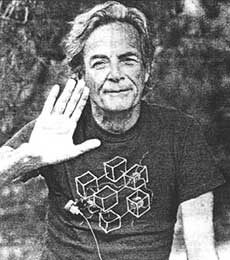
The Long Now essay by Daniel Hillis on “Richard Feynman and The Connection Machine” contains some fantastic, inspiring nuggets, which I couldn’t resist quoting from … they really remind me of conversations at Jodrell Bank.
“… we planned to connect the processors in a 20-dimensional hypercube …”
“In retrospect, if we had had any understanding of how complicated the project was going to be, we never would have started.”
“… he distrusted abstractions that could not be directly related to the facts.”
“Since the only computer language Richard was really familiar with was Basic, he made up a parallel version of Basic… “
“Like many physicists who had spent their lives going to successively lower and lower levels of atomic detail, Feynman often wondered what was at the bottom. One possible answer was a cellular automaton. The notion is that the “continuum” might, at its lowest levels, be discrete in both space and time, and that the laws of physics might simply be a macro-consequence of the average behavior of tiny cells. … If the universe in fact worked this way, then it presumably would have testable consequences, such as an upper limit on the density of information per cubic meter of space.”
“… a typical Richard Feynman explanation … on the one hand, it infuriated the experts who had worked on the problem because it neglected to even mention all of the clever problems that they had solved. On the other hand, it delighted the listeners since they could walk away from it with a real understanding of the phenomenon and how it was connected to physical reality. “
Balancing vast complexity with the ability to genuinely communicate ideas is a remarkable skill, and very hard to find. As someone who takes quite a long time to understand the complexity, I’m eternally grateful to the handful of people I’ve met who can do this. The chasms between science and its representations in business, politics and the media are intensely frustrating, and very hard to navigate.
Has anyone documented best-of-breed examples (like Feynman) to try any cement those bridges? Why don’t we have better communication? We have great examples of interconnected silos, but no real cohesion…

(image from http://www.longnow.org/about/)
No Comments »
|