del.icio.us links
dgen's Last.fm

Creative Commons License

home :: work :: projects :: blog  :: people

2007-01-30 (Tue)

Global Cool launches

January 30th, 2007 by Gavin

So, today is the official Global Cool launch day.

Expect a fair bit of coverage tomorrow in the UK and USA.

Here’s some coverage that’s already out there:

PR Newswire

The Sun

Yahoo UK and USA

However, one important correction – Yahoo is correct when it says “[Global Cool] is being funded by a consortium of blue-chip financial institutions, which have set a target of $250 million in support of its ten-year campaign” rather than The Sun’s “Big business have donated £120m to support the campaign”. All donations are gratefully received!

Some discussion is already on the BBC Newsnight group and BBC6 and a nice diversity cropping up from people like The Scotsman, Between Planets, Hugg (EcoRazzi), Ultimate Guitar, EarthTimes

Hope you enjoy the new site, and this is just the tip of the (proverbial) iceberg. We have a lot of work ahead.

For example, “the campaign would be sound-tracked by none other than former Doors frontman, Jim Morrison.”

“The London briefing will be followed by a reception at 10 Downing Street with Prime Minister Tony Blair and 50 of the world’s top business and climate control leaders.”

2007-01-29 (Mon)

Global Cool v0.3

January 29th, 2007 by Gavin

We’ve launched v0.3 of the site, with an all-new carbon calculator with more valid and traceable calculations and tied into both your user profile, and the donation system.

This is still the “lite” version, but gives an idea of where we’re going… one step at a time.

As usual, thank you’s go out to the team;

Andy, Dave, Matt, Ryan, Jenny, Anna, Chris, Dig, Marcus and Rob.

I’m sure there will be many, many questions about this going forward and we’re looking forward to getting feedback to make it better.

There will certainly be some exciting news over the next few months.

Global Cool bubbling

January 29th, 2007 by Gavin

Some interesting pieces coming out now…

On the CEO, Julian Knight, in the Telegraph.

On some of the media relationships…

Satellite Party: Aspen Times

Hollywood (Orlando Bloom) and Music (Coldplay, Scissor Sisters)
in The Guardian

KT Tunstall: The Daily Record

More coming soon…!

2007-01-26 (Fri)

A capitalist dilemma

January 26th, 2007 by Gavin

Hello from San Francisco,

meanwhile, in The Guardian…

“The really chilling thing about the IPCC report is that it is the work of several thousand climate experts who have widely differing views about how greenhouse gases will have their effect. … Only points that were considered indisputable survived this process. This is a very conservative document …”

“The impact will be catastrophic, forcing hundreds of millions of people to flee their devastated homelands, particularly in tropical, low-lying areas, while creating waves of immigrants whose movements will strain the economies of even the most affluent countries.”

We need to address our fear of this future and dire prospects and move into action in a way that we’ve never had to before.

There can be no argument that addressing both the human causes and environmental solutions is imperative. This includes building programmes to address inevitable outcomes as much as it means investment in existing and new technologies.

However, we also need to address what we can all do today, with no technology, no legislation and no “other” to aid our individual impact.

The joke might run “how many citizens of the world does it take to change a llight bulb” – because if they did it’d take 250 million tonnes of CO2 out of the equation. If you’re not switching off your stuff, using less water, driving less, and making those personal commitments (that cost you less), then you know what’s going to happen, and it’s your fault.

Governments and industry are acting, slowly, and are faced with a (growth-)capitalist dilemma – how to make more money by encouraging less consumption. Of course there are £trillions to be made from the right long-term solution, but we need to incentivise them into action – through our personal actions – to make tough decisions to create new economies.

Our next steps will require us to take significant actions that are not based on short-term £profit.

2007-01-20 (Sat)

We have 5 minutes to save the planet…

January 20th, 2007 by Gavin

The Doomsday clock has been moved forward 2 minutes, to 5 to 12, one of the reasons cited being climate change…

The Bulletin of the Atomic Scientists’ Doomsday Clock conveys how close humanity is to catastrophic destruction–the figurative midnight–and monitors the means humankind could use to obliterate itself. First and foremost, these include nuclear weapons, but they also encompass climate-changing technologies and new developments in the life sciences and nanotechnology that could inflict irrevocable harm.”

It should be noted that this is one clock where the hands can be moved in both directions…

2007-01-18 (Thu)

Carbon Offsetting moves forward

January 18th, 2007 by Gavin

Very exciting times – quotes from this BBC article

‘The UK government is to define criteria for carbon offsetting schemes to bring “greater clarity” to the industry. …

The Department for Environment Food and Rural Affairs (Defra) will name four providers that already meet the criteria, including Pure, Global Cool, Equiclimate and Carbon Offsets.’

This is very exciting for Global Cool, and me – as I’ve written about before, I helped to define the Global Cool standard.

2007-01-15 (Mon)

Climate 2.0

January 15th, 2007 by Gavin

After months/years of R&D, some questions to be addressed and actioned over the next few weeks.

Assume;

1) We are past the tipping point of social awareness

2) Everyone (at least in the UK) has already “changed their lightbulbs” (mentally if not physically)

3) The campaigners (old and new) of the last 20+ years get a chance to move on to the next stage

4) Many want to do something

5) Some will expliot the situation

6) Global action is required, albeit dispropotionately

7) We need something useful for this year, next year, etc.

8) We need to develop shared vision

9) It’s all about the “user”

10) We need to act

2007-01-14 (Sun)

Ipix goes away…

January 14th, 2007 by Gavin

Amazing it took so long really. I did some photography work with them in the late 90s in return for kit and free software/keys/etc. We also made some 360 degree video in 2000 (I need to dig that out sometime as it was quite cool)

They could have been great if they’d not sought to try and charge to “develop” every-single-photo, which was insane, very annoying and throttled their business – and they harshly protected their “patent” on the stitching of 2 fish-eye photos (which was just laughable by anyone with a maths background – really. nonsense). I tried, but failed, to convince them to change… money getting in the way of making money again.

Just as bad was the cash-burn, I looked at their annual accounts a few times and it was clearly a dot-com play that lucked out for a bit too long and took a while to burn out.

Oddly, the Ipix site seems unaffected and doesn’t even mention the news… although in other news, it looks like the controversy is continuing around their patents.

There are plenty of open-source solutions out there, for example, the great (£40) PTGui

2007-01-7 (Sun)

Einstein at least 99.95% right

January 7th, 2007 by Gavin

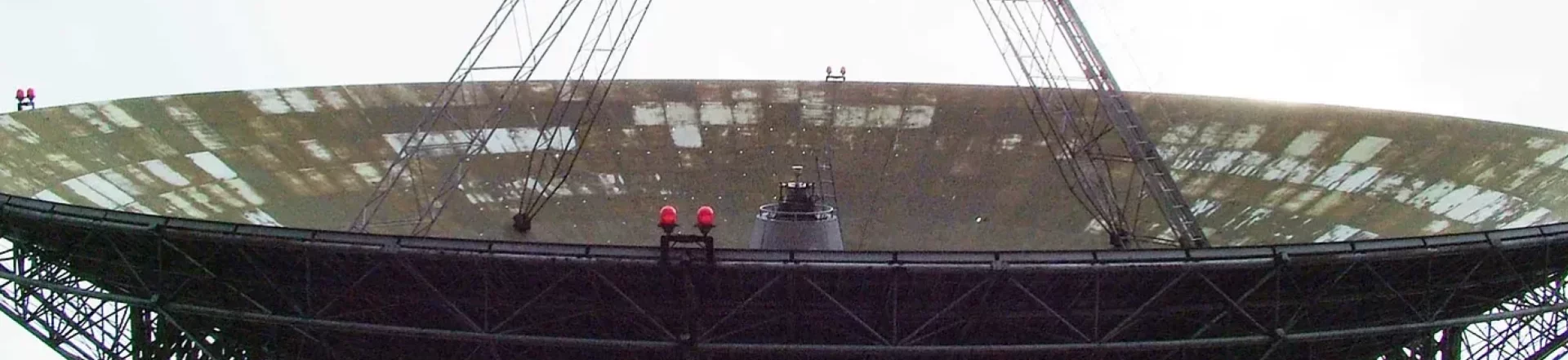
Announced late last year, but I only just noticed, “An international research team led by Prof. Michael Kramer of the University of Manchester’s Jodrell Bank Observatory, UK, has used three years of observations of the “double pulsar”, a unique pair of natural stellar clocks which they discovered in 2003, to prove that Einstein’s theory of general relativity – the theory of gravity that displaced Newton’s – is correct to within a staggering 0.05%.” (Jodrell Bank)

Hurra.

And a great addenda to my piece based on the pair, called PSR J0737-3039B which I hope will be played on Antarctica’s first artist-run radio station (go Adam!) sometime this month if it gets there!

Listen to a clip here.

The blurb of the piece, which I wrote in 2004 is here:

“PSR J0737-3039B (ds squared – series 1) [8m56s] 2004

Inspired by the discovery of the first double-pulsar system (ranked as the 6th most important scientific discovery of 2004). Pulsars are “pulsating stars” – objects with about the same amount of matter in them as our Sun, but squashed into a 20km ball. They spin very quickly (some a thousand times a second) and emit jets – creating a lighthouse type effect. These two not only spin, but rotate around each other every 2.4 hours. One spins 45 times a second, the other every 2.8 seconds. They are very chaotic, and will collide in 85 million years, maybe turning into a black hole. By analysing them we can check many of Einstein’s theories of General Relativity, which help us understand how the Universe works.

The piece is named after the slower pulsar, PSR J0737-3039B, or alternatively ‘ds squared – series 1′, reflecting some of the 4 dimensional geometric properties used in this field. Collaborators: Andrew Newsam (Astronomer + Software), Peter Clive (Piano), Jaako Mattila (Artist), Ulya Gumeniuk (Artist), Aidan Keane (Cosmologist)

PERFORMANCES
Dorkbot, London, UK 2004
Iberne Radio Telescope, Latvia 2004.
Sprawl, London. Nov 2004
DEAF04, Rotterdam. Nov 2004
ResonanceFM, London. Nov 2004
La France, London. February 2005
Science Museum, London. April 2005
Placard, London. September 2005
Poitiers/Bourges, France. February 2006″

I’ll get on and write the second movement then…

On Demand, post-mid-collision…

January 7th, 2007 by Gavin

Thanks to Tom for reminding me that I’d forgotten to comment on BBC Director-General, Mark Thomson’s, Royal Television Society Baird lecture “BBC 2.0: why on demand changes everything” – Probably because I was shocked to hear unicast, multicast, p2p, drag-and-drop TV and the Creative Archive all mentioned in the same talk and used as common language by the Director-General.

I have to say I’m finding it quite a weird time seeing everything actually begin to hit the scale we thought it would. We’re past the point of mid-collision, where everyone was talking – then building, into ‘reality’ where we are starting to deal with its implications.

It seems like yesterday that I was trying to convince people that online video/audio/tv/radio was going to be much smaller than the hype at the time, but much bigger in the long run (my favourite being an 1998 NAB conference where I left 3,000 people blinking, bemused at my OHP scibblings).

As with the rest of the web, it’s down to the sheer tenacity of people. I knew folks at Cisco who’d been working on video IP Multicast for 10 years (even by 1996!) and were being told “it’ll never happen” – I hope they are still there and seeing it hit the consumer domain (at Tornado we used to do Cisco’s IPTV intranet channel production).

Peggy, and everyone in the IWA crew have been evangelising (literally) since the early 90s. Before then it flips back into the realms of academia for me (streaming audio over ATM lines between Glasgow and Edinburgh in 1992).

It’d be great to know more about some of the earlier research that was going on in the 80s (Alan Boyd, the first Product Development Manager at Microsoft in 1980, pointed me in the direction of some of it) but I’d love to find out more of the original architects [puts on todo list 2007].

So, all this nostalgic rambling is to say, I can’t wait to be part of what happens next and feel pretty lucky to have been part so far.

There are a lot more post-mid-collisions in progress – CI seems to have found itself in the midst of the music sector reboot. In other areas, data is finding its way into the public domain a bit like water seeping through rock.

“There are a million simple problems that need to be solved before you should even consider trying to solve the complex ones” (37signals) is something we do a lot – lots of small steps. The trick is also to parellelise the steps into many discreet particles all of which can autonomously resolve themselves (to borrow from particle physics, let the wave functions collapse).

It’s just great to experiment live.

Next Page �