Broadside: write once, post many, keep everything
A self-hosted social posting tool, ensuring you own your own content In my ongoing experiments with ai-assisted dev of tools I’d like, I’ve create Broadside […]
A self-hosted social posting tool, ensuring you own your own content In my ongoing experiments with ai-assisted dev of tools I’d like, I’ve create Broadside […]
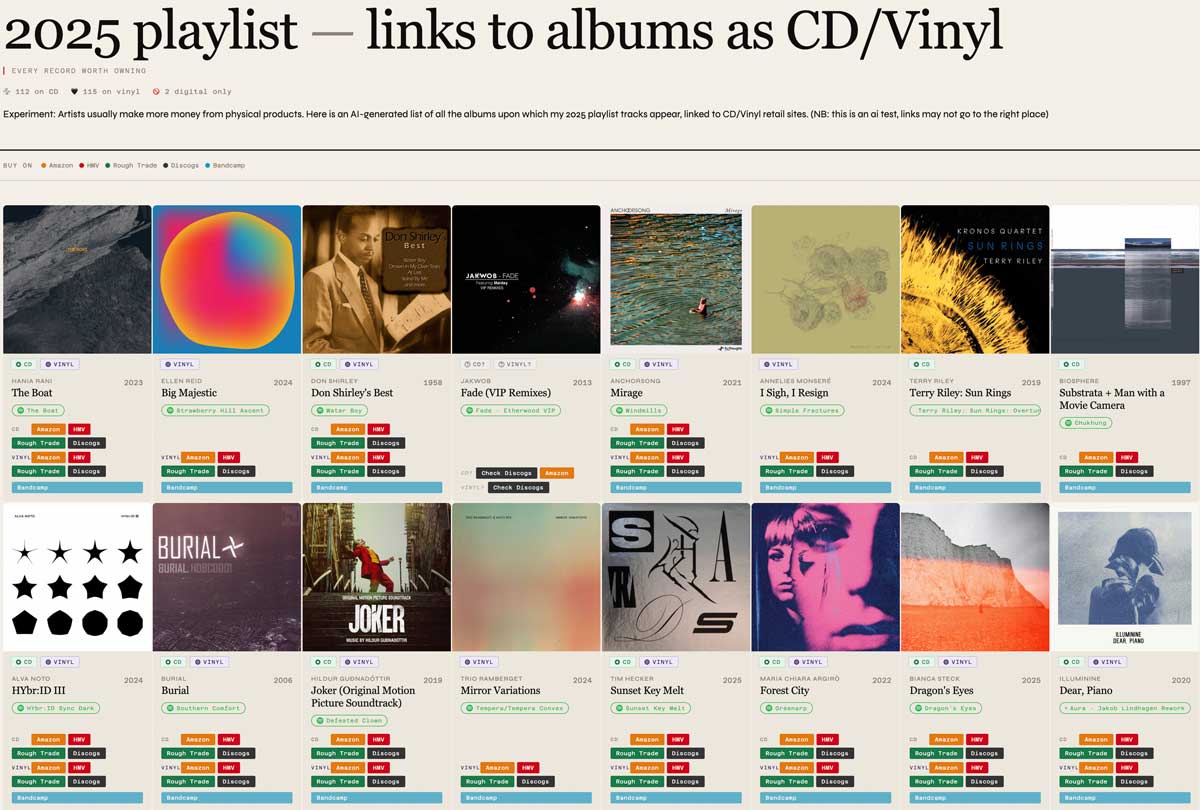
Turning your Spotify playlist into a record collection, and why that could be really disruptive Quick summary I’ve long wanted to make it easy to […]
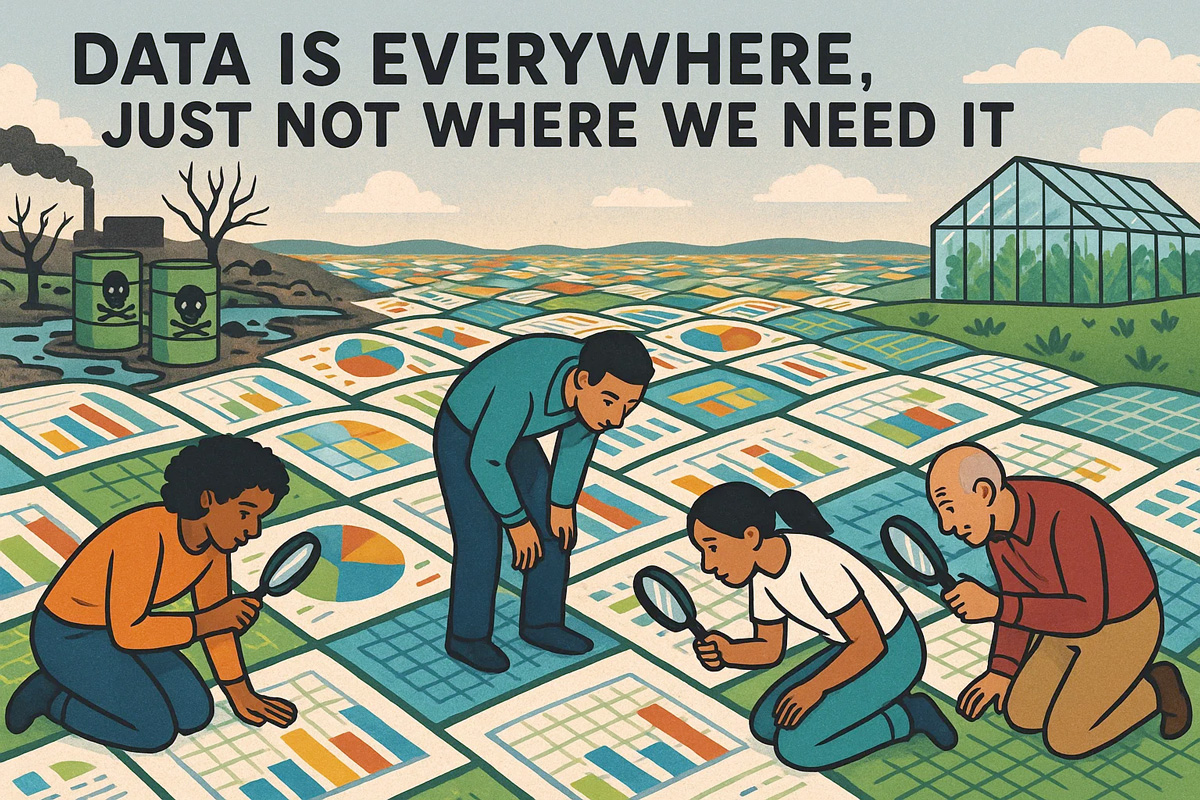
We’ve never had more data. Some think it’s the new oil, the new gold, the new soil, something of a revolution. Is it? Or are […]
The National Data Library can deliver its vision,but it must pivot to build trust in the age of today’s web This post builds on observations […]
(please note my disclosures at the end of this post) This post contains (as-always) personal opinions and thinking-in-progress (strong opinions, weakly held) as I navigate […]
This insightful report, from the Royal Societies DELVE initiative, “Data Readiness: Lessons from an Emergency” delves into the crucial role of data in emergency situations […]
We are in the midst of two exponential changes: our environmental crises (e.g. climate change) and the web of data. I created Icebreaker One to […]
From a discussion with a non-technical board which I was helping recently There was confusion around ‘where is the data?’, ‘who owns what?’ and ‘what […]
Here’s a basic algorithm for trading based on 1% value swings: Note: This is a basic algorithm, and there are many factors to consider when […]
I’m often asked to unpack ‘data’. There’s a lot of confusion and, often, people think it’s a function of ‘IT’ and just for the geeks. […]
https://dgen.net/d0 Having spent quite a number of decades working on data at scale, we’ve worked to codify some of the baseline principles that could underpin […]
Report: https://dgen.net/1/OpenLifeDataFramework-2021-11-18.pdf Official site: https://appg-longevity.org/open-life-data-framework Vision: To enable consent-based, trust-enhancing and secure sharing of personal ‘health-relevant data’ from the private sector to improve and level […]
The FCA has put forward all the major recommendations we (Open Finance advisory) made in 2019… laying a path towards Open Standards for Shared Data […]
What is ‘good behaviour’ in https://en.wikipedia.org/wiki/Surveillance_capitalism? Follow the data: https://pagexray.fouanalytics.com/q/www.dailymail.co.uk%2Fushome%2Findex.html vs https://pagexray.fouanalytics.com/q/yoti.com Compare and contrast. I continue to believe that we need commercial companies to […]
Net Zero Data ™ Data related to delivering Net Zero impact on our ecosystem.
Given the number of times that people/startups ask me for insights about team-building (and the fact I’m building upon them with Icebreaker One under lockdown conditions) […]
Our transition to net-zero is underway — how can we ensure it is provable, robust, secure and fair? via The FT we have The world’s largest oil […]
Smart Data: Research on Consent, Liability & Authentication The government has estimated that the impact of personal data mobility enabled productivity and efficiency is worth […]
Digital ≠ website design ; Digital = market design What is the whole-of-market design for data-sharing? Rather than giving a detailed narrative at this stage, […]
Have you ever run, funded or been part of a development project? Have you ever gotten to the end of it and felt that, […]
I’ve been receiving a lot of calls from people asking how they can use data to ‘help’. To help frame a potential response that isn’t […]
In City AM [Re: Why Open Banking is the next finance revolution] As co-chair of the original Open Banking Standard, it’s great to see the […]
The Financial Conduct Authority set up an Advisory Group on open finance to discuss the potential of extending open banking-like data-sharing to a wider range […]
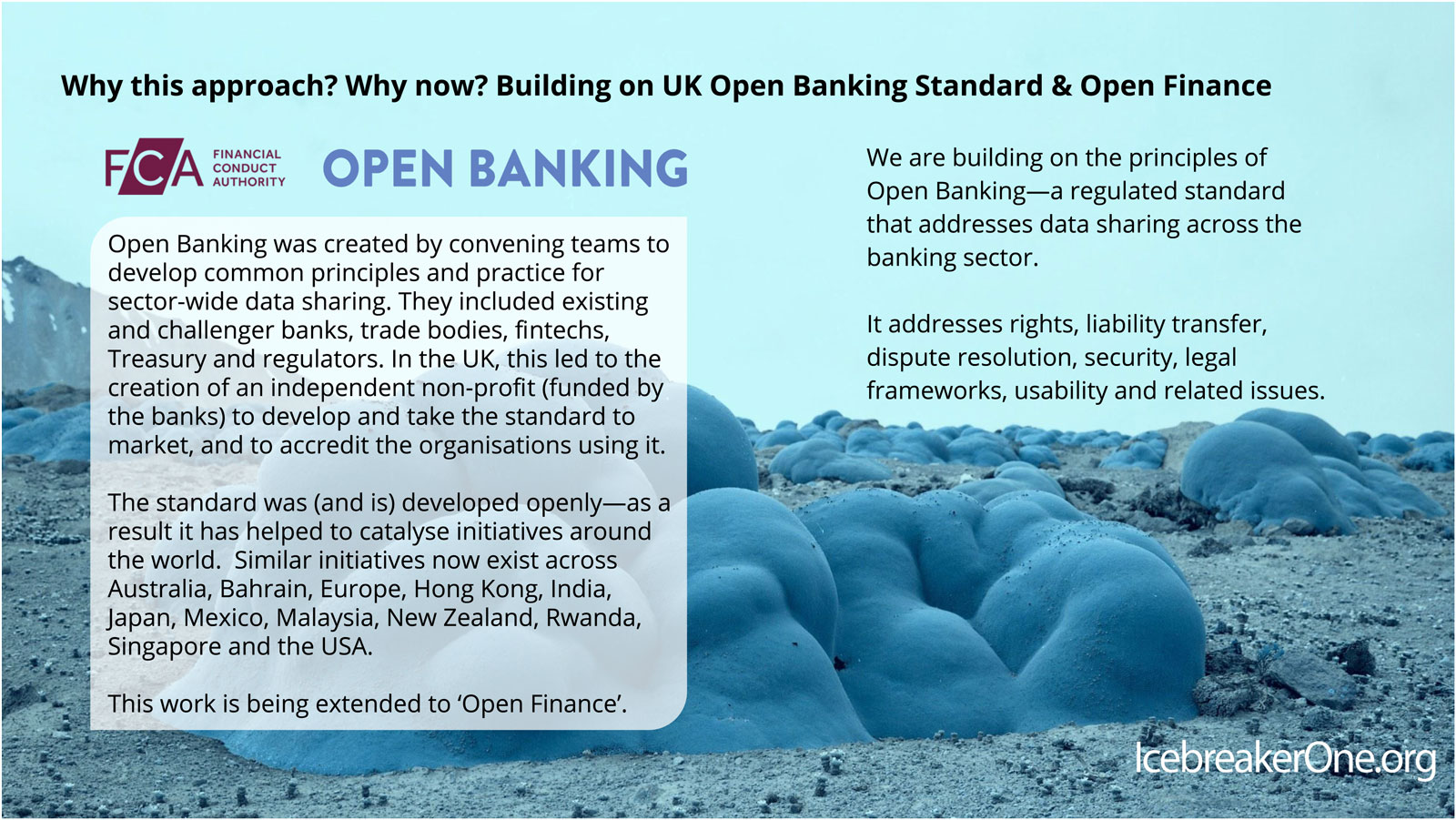
Open Banking—is a regulated standard that addresses data sharing across the banking sector. It addresses: Rights Liability models Dispute resolution and redress Consent Security Legal […]
The above chart is an evolution of the work of Simon Wardley, which I’ve been following for many years. It feels like we’re in another […]
After an 18-month industry consultation, we opened Icebreaker One at the UN Climate Action Summit in New York. –> More information here on the new IcebreakerOne.org […]
Working with Dance Collection Danse (DCD) we have created a vision for their new national digital archive: a shared history that could be a co-created and co-managed […]
We announced of our first open consultation for IcebreakerOne at the UN DRR Global Platform on 13 May 2019.
One of the things I’m most proud of creating at the ODI is the Data Spectrum, to us help understand the language of data. When […]
Development of the Open Environmental Risk Standard continues: this week, we’ve been working on a one-pager to translate what we’re doing in to more simple […]
Yesterday, we hosted the kick-off meeting for the Open Environmental Risk Standard start up team. This is our summary of that conversation. Over 50% of […]
Interested in the future of open banking, open pensions, open insurance, open … finance? What do you think? Open Finance will … in your words: […]
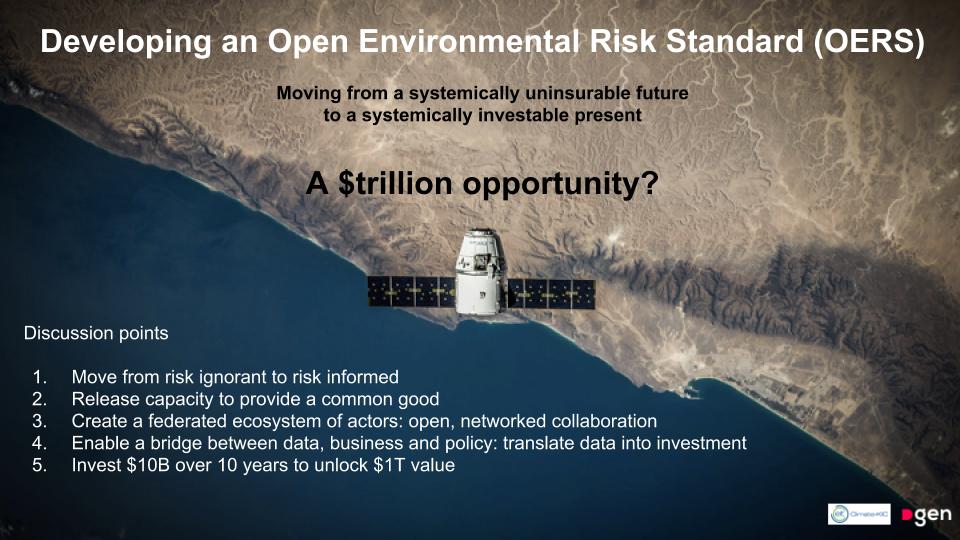
UPDATE 2019-02: briefing note here Working with Europe’s leading climate innovation fund, Climate KIC, we are initiating the creation of an Open Environmental Risk Standard for […]
Can government remember? Is it condemned to repeat mistakes? Or does it remember too much and so see too many reasons why anything new is […]
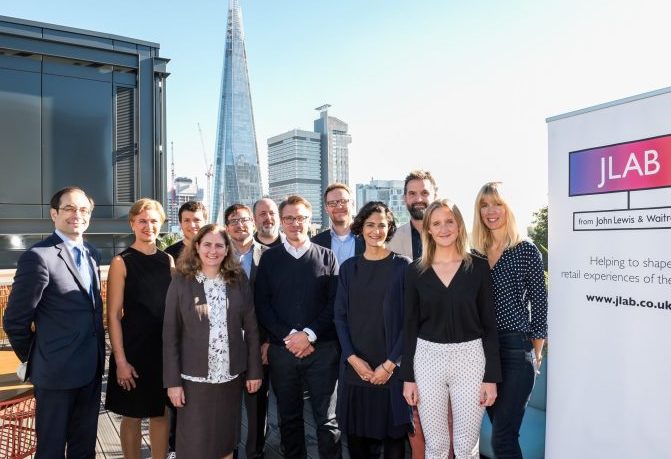
John Lewis Partnership has announced a collaboration with London startup CupClub, (disclosure: I’m a non-exec director), which will see the subscription service trialled within the […]
We have completed our comprehensive International review & benchmarking of Open Banking for the Canadian government, covering: Australia Europe Hong Kong India Japan Mexico Malaysia […]
At the 2015 CHOGM in Malta I suggested it would be prescient to consider the future of the Commonwealth through a digital lens. At the […]
We have completed our review of the development of UK open banking for the Canadian government, tracing its history back to the 2007-2008 financial crisis […]
On Wednesday 18 April, Nesta is hosting the launch of a new report prepared by Gavin Starks. The report entitled ‘Can government stop losing its […]
Great to see Data Infrastructure gaining traction with the National Infrastructure Commission: 1. https://www.nic.org.uk/publications/data-infrastructure-paper-national-infrastructure-commission/ 2. https://proftomcrick.com/2018/02/03/data-as-infrastructure Background In 2015, while at the ODI, I helped […]
Continuing the theme of “do you need a blockchain for that?”, consider the following questions: I am often presented with “We use blockchain to solve […]
“Society is demanding that companies, both public and private, serve a social purpose.” Larry Fink, CEO, Blackrock (who manage $1.7 trillion of active funds) “Not all […]
The Open Banking Standard, which I co-chaired the development of, started to roll out on 13 Jan 2018. Creating open APIs is part of the […]
I’ve joined the Advisory Board of DECODE, which is exploring tools that put individuals in control of whether they keep their personal data private or […]
I joined the judging panel at FutureHack, the first ever Hackathon to take place around Davos during the week of the World Economic Forum, as a […]
Provenance raises $800K to launch groundbreaking service for transparency in the food and drinks industry British tech startup Provenance, a digital platform enabling brands and […]
“The world’s most valuable resource is no longer oil, but data” says The Economist “Data is the new oil”, said Clive Humby and many others [*update: […]
In 2005, I was working with climate change charity Global Cool and global hedge fund Man Group (in my spare time) to try and create a global […]
Slides from Data Protection 2017, https://dma.org.uk/event/data-protection-2017 “Culture is always left to the end in technology revolutions. Make no mistake, the web of data is a revolution: […]
It’s almost as if “Destroying the Earth should be viewed as a crime.” The UN and Interpol report that environmental crime is a growing threat […]
Reposting from my tweet: ■ Observe→Question→Hypothesise→Create tests →Test→Adapt→More tests→Generalise→Repeat↺ [The Tweetable Scientific Method]
Thinking about the sea http://www.nytimes.com/2015/08/02/sunday-review/protecting-the-untamed-seas.html and webcasting https://dgen.net/blog/ms-hans and music http://rinse.fm http://store.darkclover.ro/album/sabo http://tidal.lurk.org http://lysuc888.blogspot.co.uk http://www.aec.at/aeblog/en/2015/08/03/rhythmus-als-dna-der-musik and long playing things http://longplayer.org/about/ and cosmology/topology http://www.binarydust.org/2012/09/21/evolving-language http://www.nersc.gov/news-publications/nersc-news/science-news/2014/simulations-reveal-unusual-death-for-ancient-stars and […]
Well, it’s been a while since I posted here (Twitter still winning), but here’s a long overdue synopsis of some of the things my first […]
Nice to see the similarity in thinking here (2008 AMEE logo vs 2013 W3 conf logo)
A quadrillion lives are in your hands. We often hear people talk of “protecting future generations”. There is certainly a lot of value in thinking […]
I know it can be hard sometimes to grasp and translate ideas in a single-shot, over the phone, but this Guardian “article” recounting their interview […]
My slides from O’Reilly’s Strata conference “Making Data Work” today. I described some of AMEE’s journey: through open data aggregation and distribution, accessibility, provenance, and […]
During the Olympics Opening Ceremony, the creator of the web tweeted “This is for everyone” to millions of people around the world. Decades since their […]
[repost of my AMEE post on Energy Identity] Since AMEE’s inception in 2005, we have recognised that the emerging sets of data needed for carbon […]
Two pieces really struck me today. I think we can expect to see this form of direct action increasing. The issues (control of resource, environmental […]
Well, it’s taken a little while to pull together, but Binary Dust is now live. Hope you enjoy.
A tragic and untimely loss. David is still a huge inspiration, his thinking, consideration and actions have touched so many people. I am glad we […]
Hermann Scheer (1944-2010): German Lawmaker, Leading Advocate for Solar Energy and “Hero for the Green Century” in One of His Final Interviews [emphasis mine] “HERMANN […]
A big shout out to RinseFM who just got their FM license [Guardian, Evening Standard]. This is the second station I’ve helped with streaming that’s […]
While mixing up a number of metaphots here, I’m thinking that RTSP and multicast would be very good mechanisms to support smart grid/smart meter infrastructure. […]
Building on this two things: 1) add the cyclic patterns for every form of centralisation->decentralisation technology | politics | finance | energy | cosmology | […]
Science, data, internet, ontology, work and non-work themes converging – my post on O’Reilly Radar, reposted below Why open data requires credibility and transparency. by […]
Things wrong with Companies House Crown Copyright data disclosure (which allows free copying) Get the DVD rom of the data – SIGH £30 for a […]
(copy of my post on the O’Reilly Radar) We’re all aware of the emotive language used to polarize the climate change debate. There are, however, […]
Archive of http://www.ugotrade.com/2008/11/02/tim-oreilly-instrumenting-the-world/ (in case Tish’s site vanishes) Tim O’Reilly: “Instrumenting the World” Sun, Nov 2, 2008 Tim O’Reilly has outlined some of the world’s […]